
What Goes in Your Totes

Trash tote, recycling tote, and what has to stay out of both

Carney Disposal trash truck servicing a neighborhood route
The Short Version
Everything a household throws out goes in one of two totes. Trash goes in the trash tote, bagged. Recycling goes in the blue tote, loose and never bagged. A short list of items cannot go in either one. Those are covered below, with where to take them instead. If you are not sure, call 508-822-2208 before your pickup day.
Your Trash Tote
Goes in
Kitchen and bathroom trash
Food scraps and food-soiled paper
Napkins, paper towels and tissues
Plastic bags, wrap and film
Foam cups, trays, plates and packing peanuts
Plastic cups, cutlery, clamshells and takeout containers
Milk, juice and other drink cartons
Shredded paper
Diapers, wipes and pet waste
Broken glassware, dishes and ceramics, wrapped first
Empty aerosol cans

All trash goes in bagged. Paper cups now go in the recycling tote, but their lids and straws are trash.
Stays out
Batteries of every kind, and any device containing one
Mattresses and box springs
Clothing, shoes, towels, bedding and textiles
Cans, bottles, jars, jugs, tubs, paper and cardboard
Grass, leaves, brush and Christmas trees
Concrete, dirt, rock, brick and construction debris
Appliances, TVs and electronics
Tires, car parts and scrap metal
Paint, motor oil, antifreeze and pool chemicals
Propane tanks, helium tanks and lighters
Hot ashes, needles and medical sharps

No batteries in either tote, including alkaline. They start fires in the truck and at the sorting facility. Batteries go to a town collection day. Mattresses, textiles and scrap metal have all been banned from Massachusetts trash, ripped and stained textiles included, and we collect mattresses as bulk items.
Your Recycling Tote
Goes in
Metal food and beverage cans, aluminum and steel
Aluminum foil and foil trays, clean and balled up
Plastic bottles, jars, jugs and tubs
Glass bottles and jars
Paper and cardboard
Paper cups

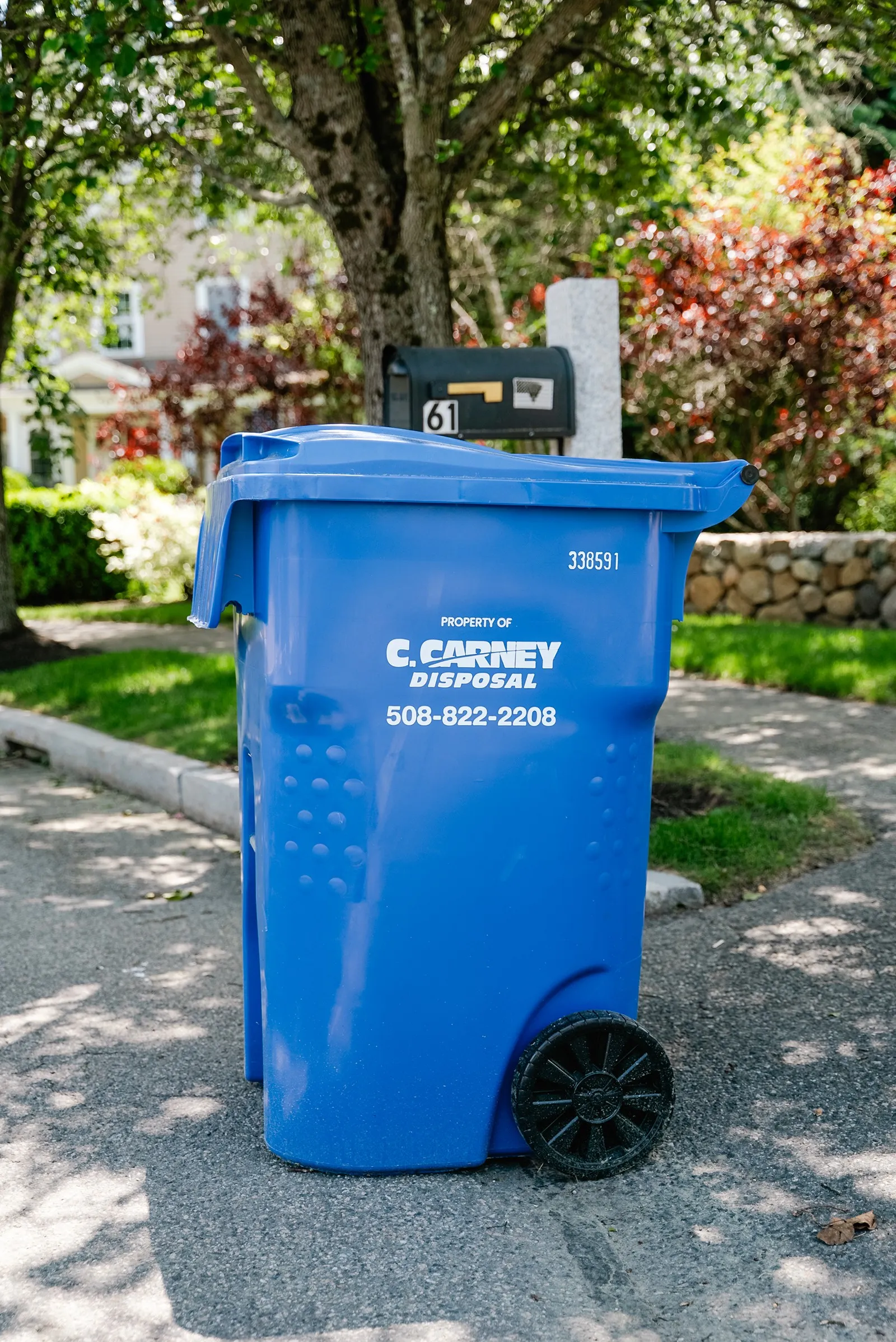
Empty and rinse containers, put the caps back on, flatten the cardboard. Everything goes in loose, never bagged. Pizza boxes count as cardboard once the food and the liner are out. Paper cups were added statewide in 2026, though their lids and straws are still trash. Past that, the shape rule holds: bottles, jars, jugs and tubs only.
Keep out
Batteries, and any item containing one
Plastic bags, wrap and film
Bagged recycling of any kind
Food and liquid
Milk, juice and other drink cartons
Plastic cups, clamshells and takeout containers
Shredded paper
Clothing, shoes, linens and textiles
Tanglers: hoses, cords, wires, chains, rope, holiday lights
Foam cups, trays and packing peanuts
Drinking glasses, dishes, ceramics, mirrors, window glass and light bulbs
Scrap metal, pots and pans, wire coat hangers
Plant pots and seedling trays
Frozen food boxes and other plastic-coated paper
Diapers, tissues, paper towels and napkins

These contaminate a load. Enough of them and the whole load goes to disposal instead of the sorting facility. Plastic bags are the largest single problem: they wind around the sorting equipment and stop the line. Cartons trip people up because they are accepted in other states, but no Massachusetts facility takes them.
Aluminum cans accepted for curbside recyclingPlastic and glass bottles accepted for curbside recyclingPaper accepted for curbside recyclingCardboard accepted for curbside recycling
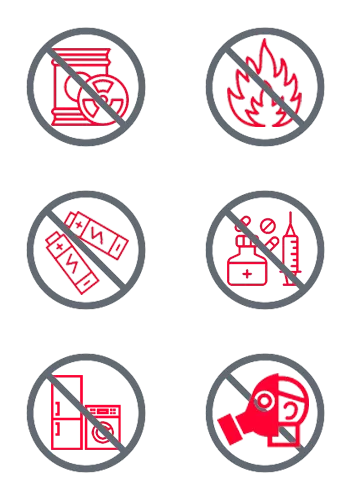
Items prohibited from Carney Disposal totes: tires, hazardous chemicals, propane tanks, batteries, electronics and appliances
Never in Either Tote
Batteries of every kind, and any device containing one
Paint, motor oil, antifreeze and pool chemicals
Propane and helium tanks
Fluorescent bulbs
Asbestos
Tires
Appliances, TVs and electronics
Mattresses and box springs
Construction and demolition debris
Concrete, dirt, rock, brick and masonry
Liquids of any kind
Hot ashes
Medical waste, needles and sharps
Radioactive, corrosive, explosive or flammable material

Hazardous waste collection days

Batteries, paint, chemicals, motor oil, antifreeze, propane tanks and fluorescent bulbs go to a town collection day or a drop-off facility. We keep a calendar of the collection days across the towns we serve, with what each one accepts and what to bring.

See the hazardous waste collection calendar

Tote Rules
Bag your trash. Everything in the trash tote goes in a bag.

Leave recycling loose. Never bagged.

Out by 7:00 a.m. on your pickup day. Leave a few feet of clearance from cars, mailboxes and the other tote.
No concrete, dirt, rock, brick or masonry. There is no weight limit on the tote, but a tote loaded with masonry will break the lift arm and will not be emptied.

Extra bags beside the tote are not collected. If you run over most weeks, call the office and we will swap you to a larger tote. For a one off, call before your pickup day and we will take an extra tall kitchen bag for $5.

Trash is collected weekly. Recycling is weekly in most towns we serve and every other week in a few.
Where the Rest of It Goes
Mattresses, box springs, furniture, appliances and TVs. Flat price per item.

Grass, leaves, brush and garden trimmings. $7 per bag, on call.

Paint, chemicals, propane tanks, bulbs and batteries. Town collection days across the towns we serve.

Scrap metal, pots, pans and empty paint cans. Massachusetts bans metal from the trash. Your town transfer station takes it.
Clothing, shoes, towels and bedding. Donation bins and thrift shops accept these, ripped and stained items included.

Cleanouts and renovations. 10, 15, 20 and 30 yard containers.

Anything else. Call 508-822-2208.
Carney Disposal crew collecting residential trash